When emergencies happen, people don’t measure time the same way. Seconds feel longer. Decisions feel heavier. And in many cases, those first few minutes quietly determine what happens next.
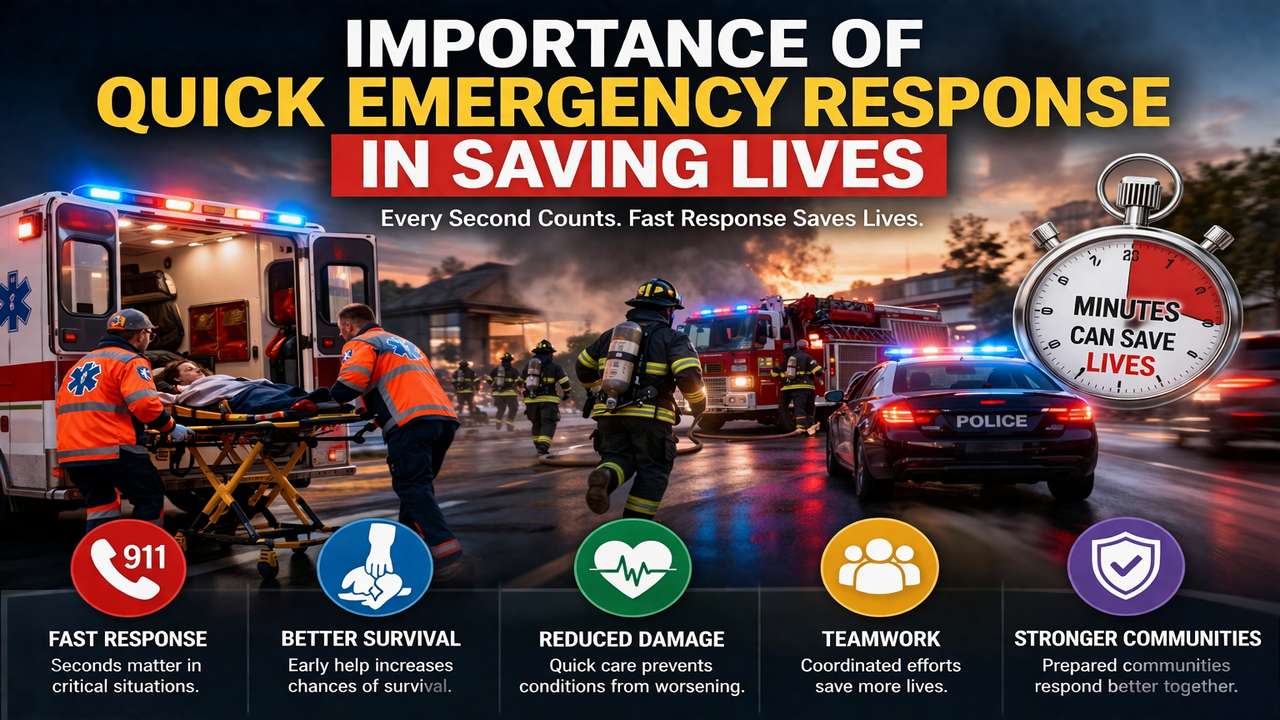
The importance of quick emergency response in saving lives isn’t just a talking point — it’s a reality seen every day in hospitals, on roads, and in homes. Whether it’s a cardiac arrest, a fire, or a serious accident, speed changes outcomes in ways most people don’t fully realize.
Why Time Matters More Than Anything Else
In critical situations, the body and environment don’t wait.
- Brain cells begin to suffer damage within minutes without oxygen
- Fires can double in size in under a minute
- Severe bleeding can become life-threatening quickly
This is why emergency systems are built around one principle: respond fast, stabilize fast.
Even small delays can shift the outcome.
The First Few Minutes: Often the Deciding Factor
Emergency professionals often refer to the “golden minutes” — the short window where early action has the biggest impact.
Take cardiac arrest as an example. Immediate CPR and early defibrillation can dramatically improve survival chances. Without that early response, the odds drop sharply with each passing minute.
The same applies to trauma cases. Rapid medical attention can prevent complications that become harder to treat later.
How Quick Response Improves Survival Rates
A faster response doesn’t just get help there sooner — it changes what’s possible.
Quick emergency response can:
- Reduce the severity of injuries
- Prevent complications
- Improve recovery time
- Increase survival rates
It allows responders to intervene before conditions worsen beyond control.
Emergency Services Are Built for Speed — But They Need Support
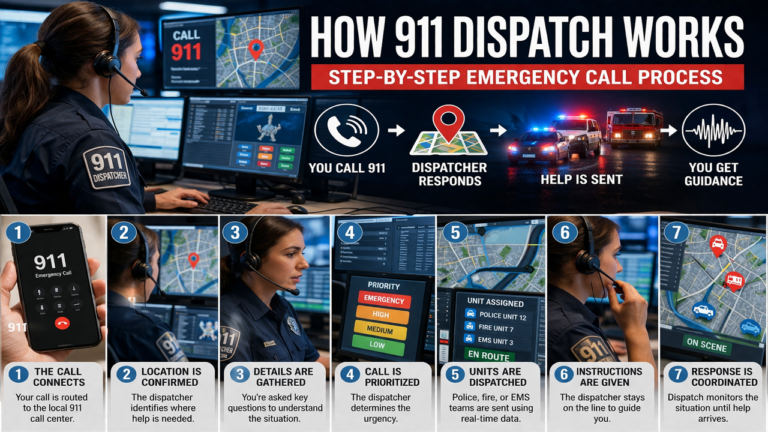
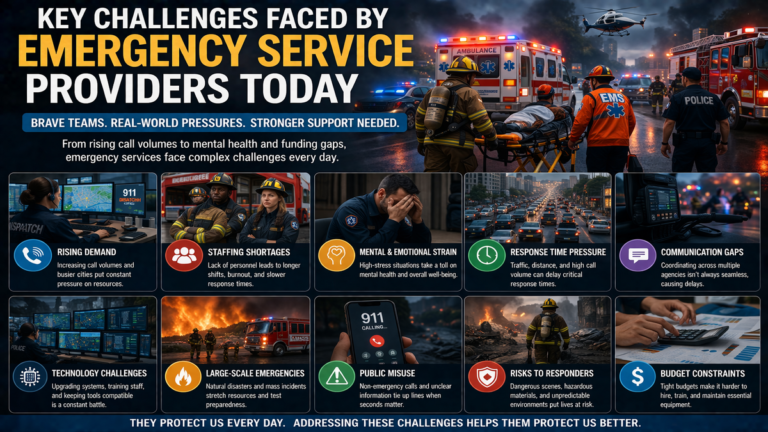
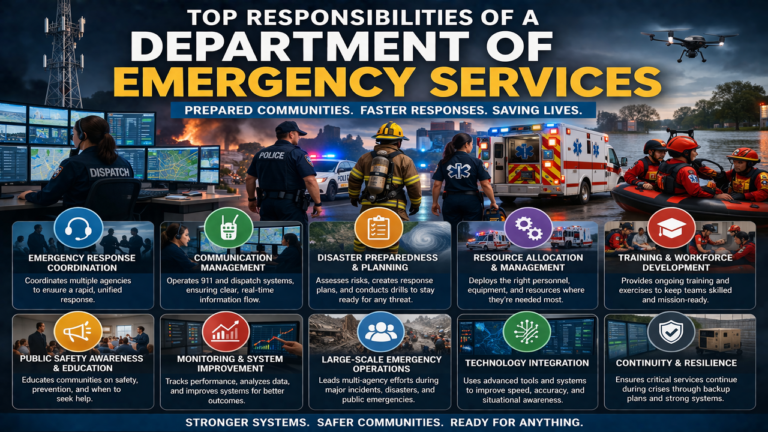
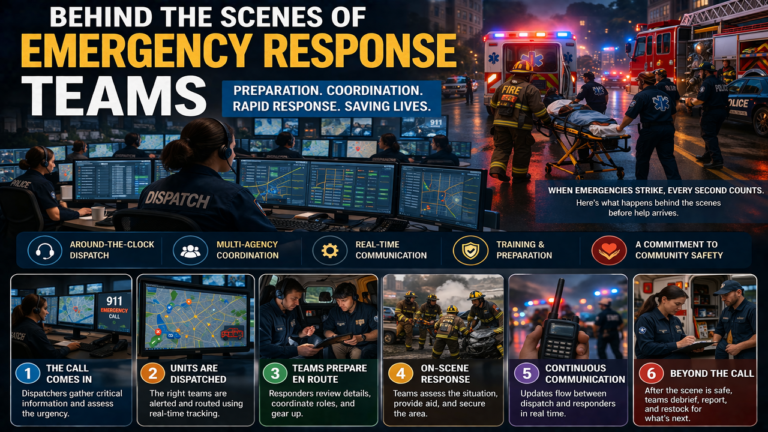
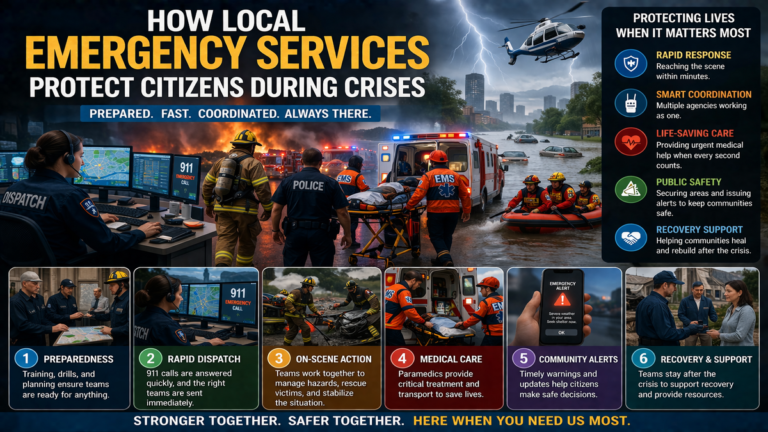
Modern emergency systems are designed to respond quickly. Dispatch centers, trained personnel, and strategically placed units all work toward reducing response time.
But speed isn’t only about professionals. It also depends on:
- How quickly a call is made
- How clearly information is shared
- Whether bystanders act before responders arrive
In many cases, the chain of survival starts with ordinary people.
The Role of Bystanders Before Help Arrives
Before emergency teams reach the scene, bystanders often become the first responders.
Simple actions can make a difference:
- Calling emergency services immediately
- Performing basic first aid or CPR
- Moving people away from danger when safe
These early steps don’t replace professional care — they bridge the gap until it arrives.
Delays: The Hidden Risk in Emergencies
Not all delays are obvious. Sometimes they come from hesitation, confusion, or lack of awareness.
Common causes include:
- Waiting to see if the situation improves
- Not recognizing the seriousness of symptoms
- Unclear communication during emergency calls
- Difficulty locating the exact address
Each delay, even if unintentional, reduces the effectiveness of response.
Technology Is Making Response Faster — But Not Instant
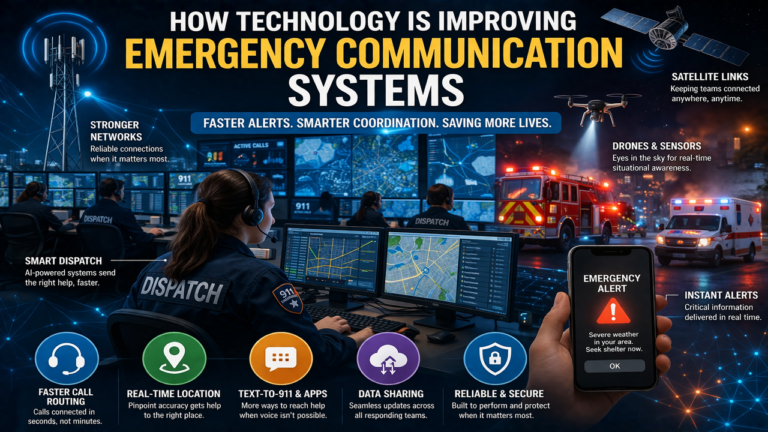
Advances in technology are helping emergency services respond more efficiently.
Improvements include:
- GPS tracking for faster dispatch
- Real-time communication between responders
- Smart traffic systems that prioritize emergency vehicles
- Mobile alerts and digital reporting tools
These developments reduce delays, but they don’t eliminate the need for quick action from the public.
Real-World Impact: Where Speed Saves Lives
The impact of rapid response is visible across different types of emergencies.
Medical emergencies
Early intervention improves survival and reduces long-term damage.
Fires
Quick firefighting response limits spread and protects lives and property.
Accidents
Immediate rescue and medical care prevent complications and fatalities.
Across all scenarios, one pattern remains consistent — faster response leads to better outcomes.
What You Can Do in an Emergency
Understanding the importance of quick emergency response also means knowing your role.
In a real situation:
- Call emergency services without delay
- Stay calm and provide clear information
- Follow instructions from dispatchers
- Take basic action if you’re trained to do so
You don’t need to be an expert. You just need to act.
The Bigger Picture
Emergency response is a shared system. It involves trained professionals, technology, and the public working together under pressure.
Speed is the connecting factor.
The faster the chain begins — from recognizing the problem to calling for help to taking action — the stronger the outcome.
The Takeaway
The importance of quick emergency response in saving lives comes down to one simple truth: time changes everything. Acting early gives people a better chance — not just to survive, but to recover fully.
In emergencies, hesitation is costly. Awareness and quick action are what make the difference.