Weather doesn’t always give you time to think. A normal day can shift quickly — dark clouds roll in, alerts start buzzing, and suddenly there’s real uncertainty about what comes next.
That’s why knowing how to prepare for severe weather emergencies is less about reacting in the moment and more about being ready before anything happens. Preparation isn’t complicated, but it does need to be intentional.
Here’s a practical guide to help you stay ahead of the situation.
Why Preparation Matters More Than Reaction
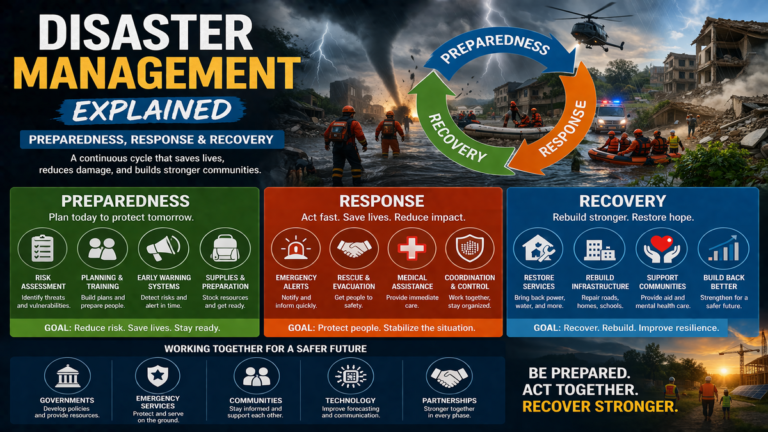
Severe weather events — storms, floods, heatwaves, or heavy winds — often develop faster than expected.
When you’re prepared:
- Decisions are quicker
- Panic is reduced
- Risks are easier to manage
Waiting until the last minute usually leads to rushed and less effective actions.
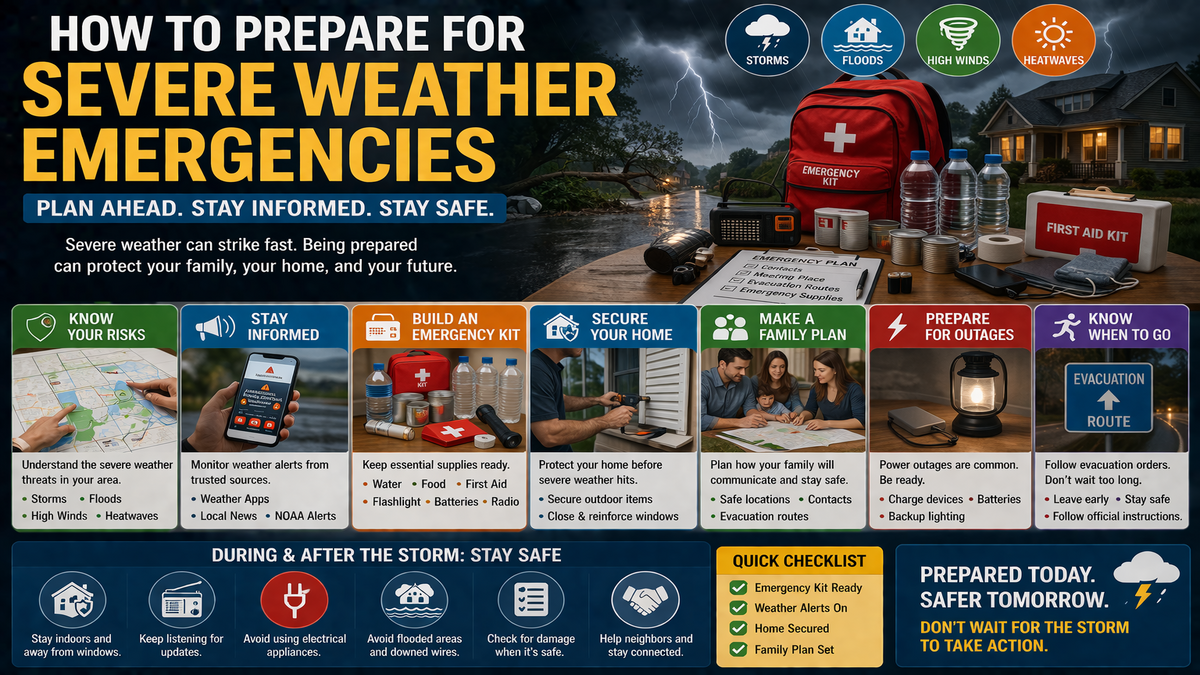
Understand the Risks in Your Area
Preparation starts with awareness.
Different regions face different risks:
- Coastal areas may experience storms or flooding
- Inland regions may deal with heatwaves or strong winds
- Some areas face seasonal weather patterns
Knowing what’s likely in your location helps you prepare for realistic scenarios, not just general ones.
Stay Updated With Weather Alerts
Reliable information is one of your strongest tools.
Make it a habit to:
- Check weather forecasts regularly
- Enable emergency alerts on your phone
- Follow official local updates
Early warnings give you valuable time to act before conditions worsen.
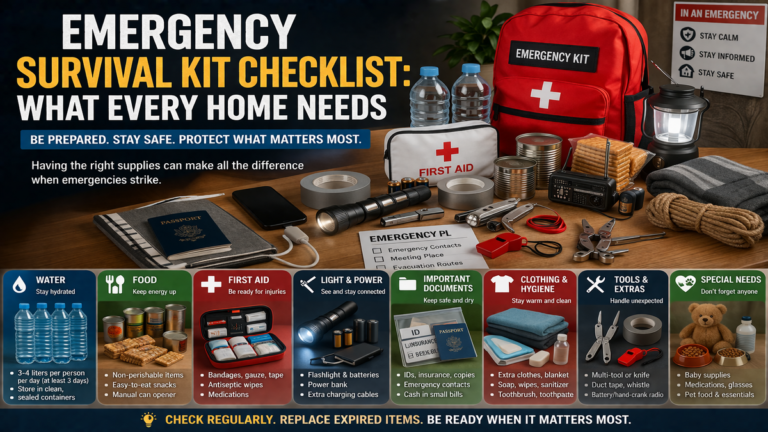
Build a Basic Emergency Kit
A simple emergency kit can cover your essential needs during disruptions.
Include:
- Drinking water
- Non-perishable food
- Flashlight and batteries
- First aid supplies
- Phone chargers or power banks
Keep everything in one place so it’s easy to access when needed.
Secure Your Home in Advance
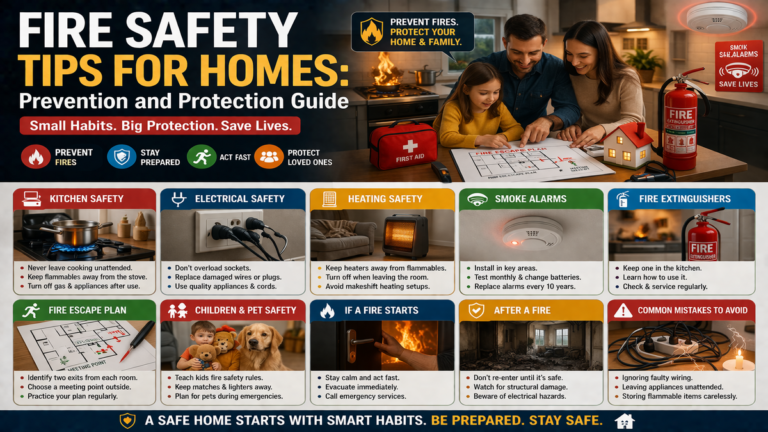
Before severe weather arrives, take steps to protect your home.
- Close and secure windows and doors
- Remove or secure loose outdoor items
- Check drainage systems if heavy rain is expected
Small precautions can prevent larger problems later.
Plan for Power Outages
Severe weather often leads to electricity disruptions.
Prepare by:
- Charging devices in advance
- Keeping backup lighting ready
- Storing extra batteries
If outages last longer, having basic supplies can make a big difference.
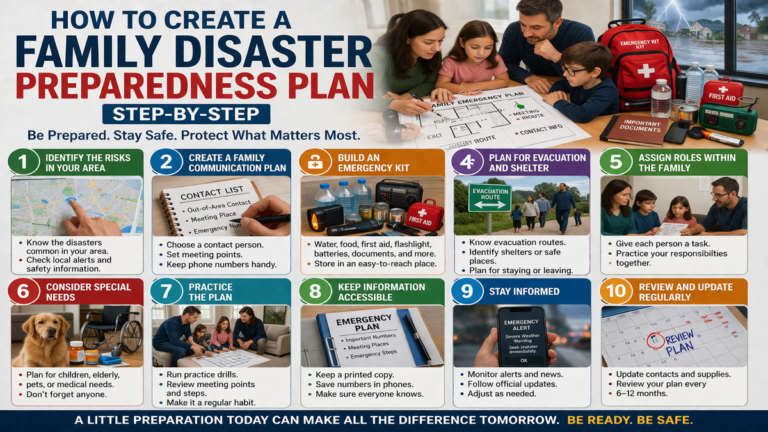
Create a Family Safety Plan
Everyone in your household should know what to do.
Discuss:
- Where to take shelter inside the home
- How to communicate if separated
- When to evacuate if necessary
Clear plans reduce confusion during stressful situations.
Know When to Stay and When to Leave
Not every situation requires evacuation — but some do.
Stay indoors if:
- Authorities advise sheltering in place
- Conditions outside are unsafe
Evacuate if:
- You’re instructed to leave
- Your area is at high risk (like flooding zones)
Making this decision early is always safer than waiting.
Protect Important Documents
Severe weather can damage more than just property.
Keep copies of:
- Identification documents
- Insurance papers
- Emergency contact details
Store them in waterproof packaging or a secure digital backup.
Stay Safe During the Weather Event
When severe weather is happening:
- Stay indoors and avoid windows
- Avoid using electrical appliances unnecessarily
- Keep listening for official updates
If conditions worsen, move to the safest part of your home.
After the Weather Passes
Even after the storm or event ends, risks may remain.
Be cautious of:
- Flooded areas
- Fallen power lines
- Structural damage
Only return to normal activities when it’s confirmed safe.
Common Mistakes to Avoid
Preparation is often undone by small oversights.
Avoid:
- Ignoring early warnings
- Waiting too long to act
- Underestimating weather conditions
- Not having basic supplies ready
Awareness is just as important as action.
The Bigger Picture
Preparing for severe weather isn’t about expecting the worst — it’s about reducing uncertainty.
When people are prepared, communities handle disruptions better, recover faster, and face fewer risks overall.
The Takeaway
Knowing how to prepare for severe weather emergencies comes down to simple steps: stay informed, plan ahead, and act early.
You don’t need a complex system — just a clear approach that helps you respond calmly when conditions change.
Because when weather becomes unpredictable, preparation is what keeps things under control.