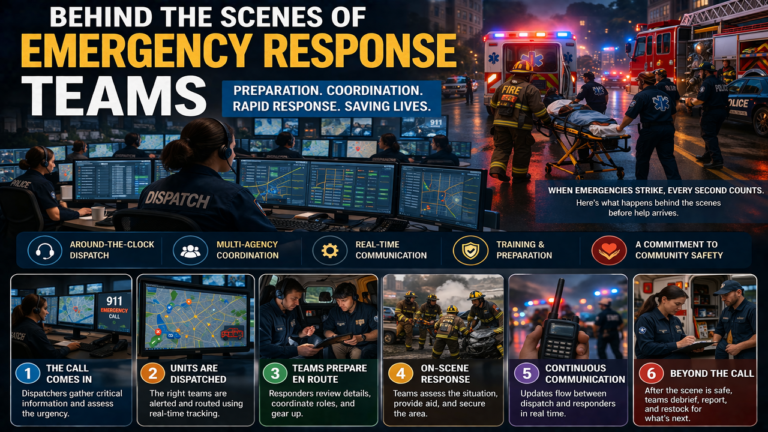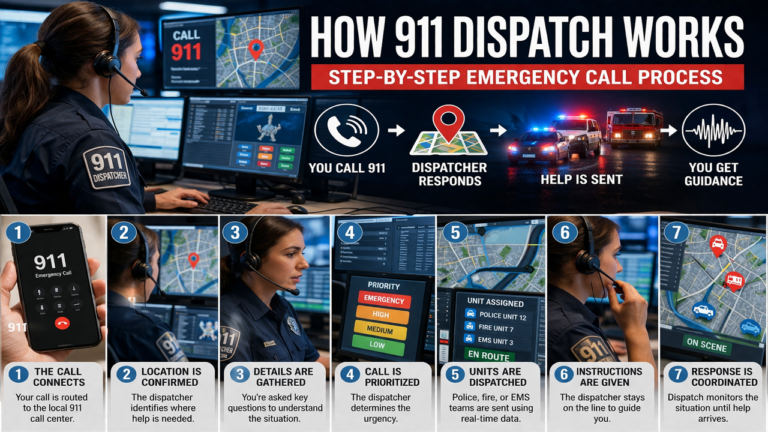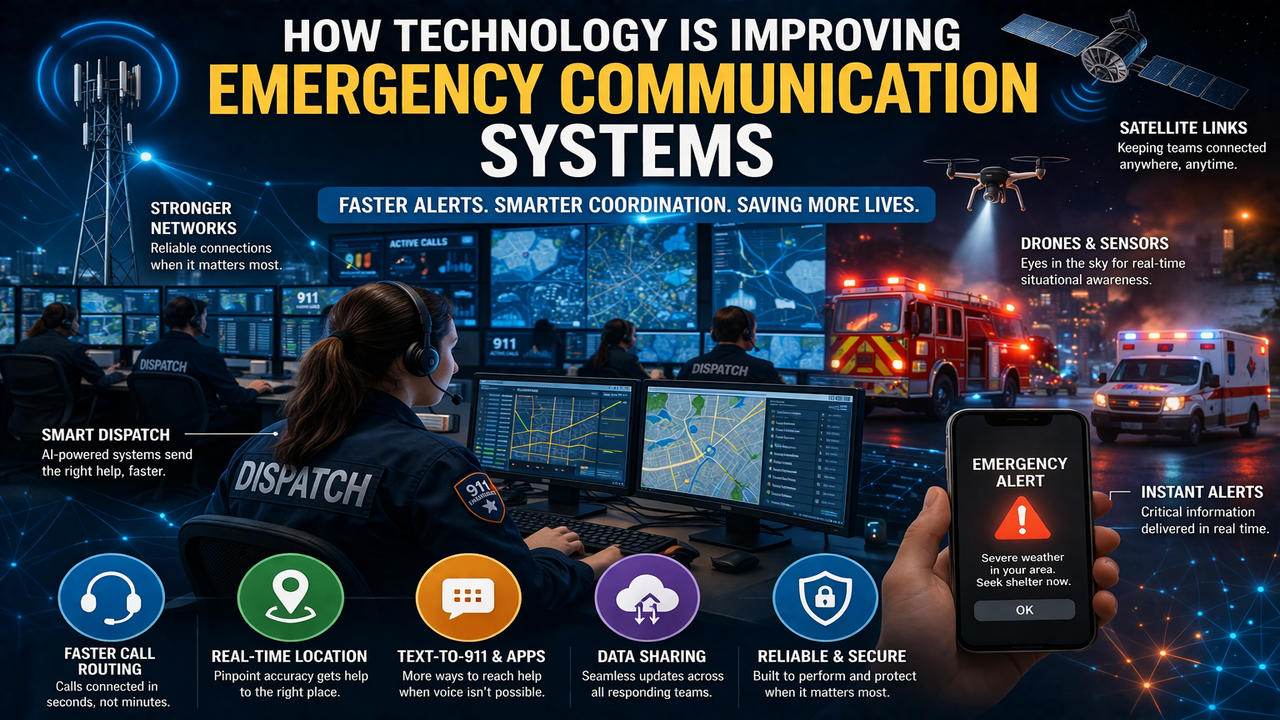
When emergencies happen, communication is everything. A delayed message, a missed location, or unclear information can slow response when every second counts. That’s why emergency communication systems have evolved rapidly over the past decade — not quietly, but out of necessity.
Today, technology is reshaping how calls are received, processed, and acted upon. The result is faster coordination, clearer information, and, in many cases, better outcomes.
The Shift From Basic Calls to Smart Systems
Emergency communication used to rely heavily on voice calls and radio dispatch. While those tools still matter, they’re now part of a much larger system.
Modern communication systems combine:
- Digital mapping
- Real-time data sharing
- Automated dispatch tools
- Multi-channel communication (voice, text, and data)
This shift allows emergency teams to act with more precision, not just speed.
Faster Call Routing and Location Accuracy
One of the biggest improvements has been how quickly calls are routed and located.
Enhanced location technology can now:
- Pinpoint a caller’s position using GPS
- Identify calls from mobile devices more accurately
- Reduce delays caused by unclear addresses
In situations where callers can’t speak clearly or don’t know their location, this technology becomes critical.
Text-to-911 and Alternative Communication Options
Not every emergency allows for a voice call. In some situations — like domestic violence or active threats — speaking out loud may not be safe.
Text-to-911 services provide an alternative. They allow people to communicate silently while still receiving help.
Other emerging options include:
- Video calls for visual assessment
- App-based emergency alerts
- Integration with wearable devices
These tools expand access to emergency services in ways that weren’t possible before.
Real-Time Data Sharing Between Responders
Once a call is received, information needs to move quickly between teams.
Modern systems allow:
- Dispatchers to share live updates with responders
- Police, fire, and EMS to access the same data simultaneously
- Continuous updates as situations evolve
This reduces confusion and ensures everyone is working from the same information.
Computer-Aided Dispatch (CAD) Systems
At the center of most emergency communication systems is CAD — software that helps manage calls and dispatch units efficiently.
CAD systems:
- Prioritize calls based on urgency
- Recommend the nearest available units
- Track response times and status updates
They don’t replace human decision-making, but they make it faster and more consistent.
Integration With Smart Infrastructure
Cities are becoming more connected, and emergency communication systems are benefiting from that.
Examples include:
- Traffic systems that give priority to emergency vehicles
- Smart cameras that help monitor incidents
- Sensors that detect fires, accidents, or environmental hazards
This integration allows faster detection and response, sometimes even before a call is made.
The Role of Artificial Intelligence
Artificial intelligence is beginning to play a supporting role in emergency communication.
It can help:
- Analyze call patterns to predict demand
- Assist dispatchers in identifying keywords or urgency
- Automate routine tasks to reduce workload
AI is still evolving in this space, but its role is growing steadily.
Improving Communication During Large-Scale Emergencies
During disasters or major incidents, communication systems face extreme pressure.
Modern technology helps by:
- Distributing alerts to large populations instantly
- Coordinating multiple agencies across regions
- Managing high call volumes without system failure
These capabilities are especially important during natural disasters or public safety crises.
Challenges That Still Exist
Despite progress, emergency communication systems aren’t perfect.
Ongoing challenges include:
- Network outages during disasters
- Integration issues between different agencies
- Privacy and data security concerns
- Training staff to adapt to new technologies
Improvement is continuous, not complete.
Why Human Judgment Still Matters
Technology can support decision-making, but it doesn’t replace it.
Dispatchers and responders still rely on:
- Experience
- Situational awareness
- Communication skills
Technology provides tools — people make the decisions.
What This Means for the Public
For everyday users, these improvements mean:
- Faster response times
- More ways to reach help
- Better coordination between emergency teams
But one thing hasn’t changed — clear communication from the caller still matters.
Knowing your location and explaining the situation clearly remains just as important as ever.
The Takeaway
Understanding how technology is improving emergency communication systems shows just how far these systems have come. What used to rely on basic calls and radio signals is now a connected network of tools designed to respond faster and more accurately.
It’s not just about speed anymore. It’s about clarity, coordination, and making sure the right help reaches the right place at the right time.