It doesn’t take a major disaster to disrupt daily life. A long power cut, a sudden storm, or a local emergency can leave households scrambling for basics — water, light, even a phone charge.
That’s where preparation quietly makes a difference. Having an emergency survival kit checklist ready isn’t about expecting the worst. It’s about avoiding unnecessary stress when something unexpected happens.
Most people think they’ll “figure it out” in the moment. In reality, those few minutes of confusion are exactly what a simple kit is meant to prevent.
Why Every Home Needs an Emergency Survival Kit
Emergencies rarely come with warning. And when they do, there’s often little time to prepare.
A well-stocked kit helps you:
- Stay self-sufficient for at least 72 hours
- Avoid last-minute panic buying
- Support family members without relying immediately on outside help
It’s not about having everything — it’s about having the right basics.
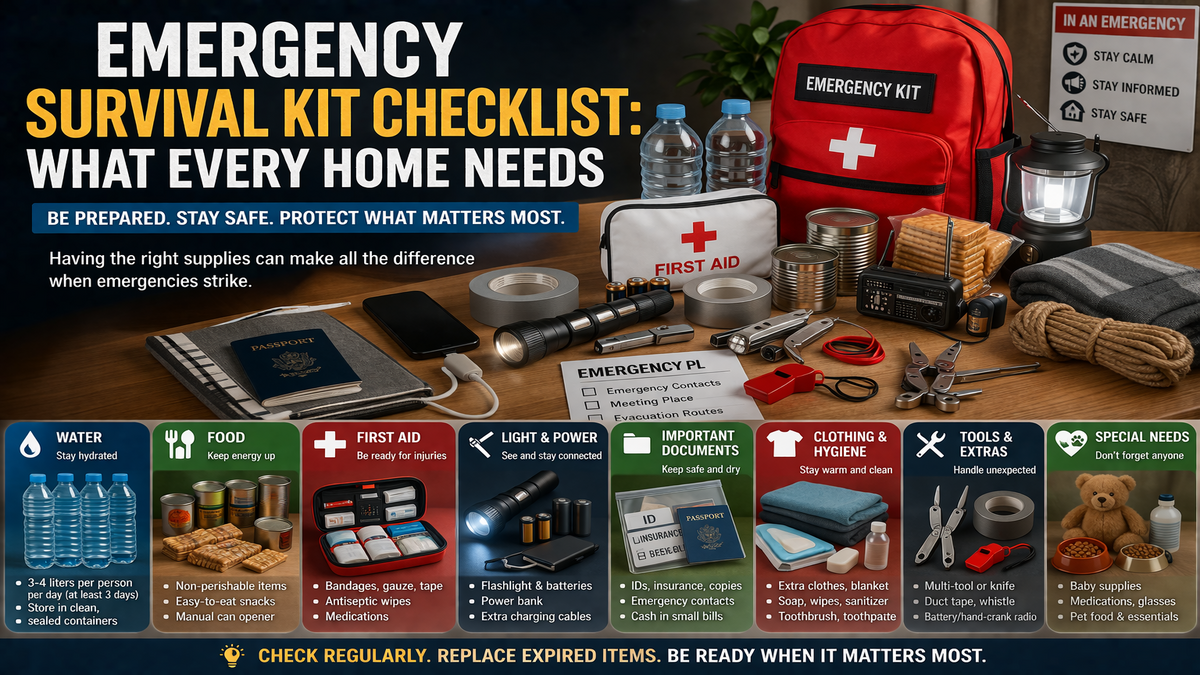
The Core Emergency Survival Kit Checklist
If you’re starting from scratch, focus on essentials first. These are the items every home should have.
Water Supply
Store enough drinking water for at least three days. A general guideline is about 3–4 liters per person per day.
Non-Perishable Food
Choose foods that don’t require cooking:
- Canned items
- Energy bars
- Dry snacks
Don’t forget a manual can opener.
First Aid Kit
A basic kit should include:
- Bandages and antiseptic
- Pain relievers
- Any personal medications
This is one of the most used parts of any emergency kit.
Flashlight and Batteries
Power outages are common in emergencies. Keep at least one reliable flashlight and spare batteries.
Mobile Chargers and Power Banks
Staying connected matters. A charged power bank can be critical when electricity is unavailable.
Important Documents and Essentials
In emergencies, access to documents can become surprisingly important.
Keep copies of:
- Identification documents
- Insurance papers
- Emergency contact numbers
Store them in a waterproof folder inside your kit.
Also include:
- Some cash (in small denominations)
- A basic phone contact list (not just digital)
Clothing and Personal Items
Comfort and protection matter more than people expect during emergencies.
Include:
- Extra clothes suited to your climate
- Blankets or thermal sheets
- Basic hygiene items (soap, wipes, sanitizer)
These items help maintain basic comfort during extended disruptions.
Tools and Utility Items
A few simple tools can go a long way.
Consider adding:
- Multi-purpose tool or knife
- Duct tape
- Whistle (to signal for help)
- Portable radio
A battery-powered or hand-crank radio can help you stay informed when networks are down.
Special Considerations for Families
Every household is different, and your kit should reflect that.
Think about:
- Baby supplies (formula, diapers)
- Elderly care needs
- Pet food and essentials
- Medical devices or prescriptions
A generic kit is a good start — a personalized one is far more useful.
Where to Store Your Emergency Kit
Accessibility matters.
Keep your kit:
- In a place everyone in the household knows
- Easy to grab if you need to leave quickly
- Away from moisture or heat damage
Some families also keep a smaller “grab-and-go” version for quick evacuation.
When and How to Update Your Kit
An emergency kit isn’t something you set up once and forget.
Review it:
- Every 6–12 months
- Before seasonal changes
- After using any items
Check expiry dates on food, water, and medical supplies. Replace anything that’s outdated.
Common Mistakes to Avoid
Even well-prepared households can overlook small but important details.
Avoid:
- Storing items you don’t know how to use
- Forgetting personal medications
- Keeping everything in hard-to-reach places
- Assuming power will always be available
A simple, practical kit is better than a complicated one you won’t use.
The Bigger Picture
An emergency survival kit isn’t just about supplies. It’s about peace of mind.
When something unexpected happens, having the basics covered allows you to focus on what actually matters — safety, communication, and staying calm.
The Takeaway
This emergency survival kit checklist isn’t about preparing for extreme scenarios. It’s about being ready for real-life disruptions that happen more often than people think.
A few thoughtful steps today can save time, reduce stress, and make difficult situations easier to manage.