When disasters make the news, the focus is usually on what went wrong — damage, disruption, and loss. What’s less visible is the system working behind the scenes to prevent, manage, and recover from those events. That system is disaster management, and it’s not just about reacting when something happens. It’s a continuous cycle that starts long before a crisis and continues long after it ends.
Understanding how it works makes it easier to see why some communities recover faster than others — and why preparation matters more than most people think.
What Is Disaster Management?
Disaster management refers to the organized approach used to deal with emergencies, from natural disasters like floods and earthquakes to human-made incidents.
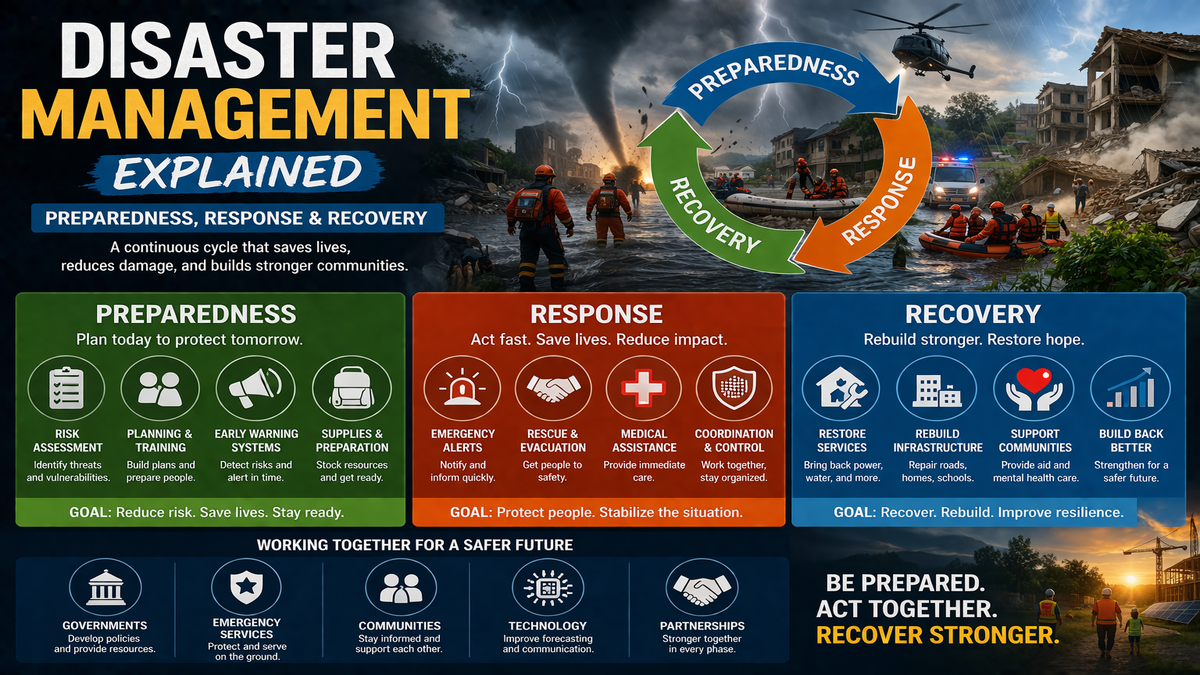
It focuses on three main phases:
- Preparedness
- Response
- Recovery
Each phase plays a different role, but they are closely connected. A strong system doesn’t rely on one phase — it depends on all three working together.
Preparedness: Planning Before Things Go Wrong
Preparedness is the foundation of disaster management.
This phase involves:
- Identifying potential risks
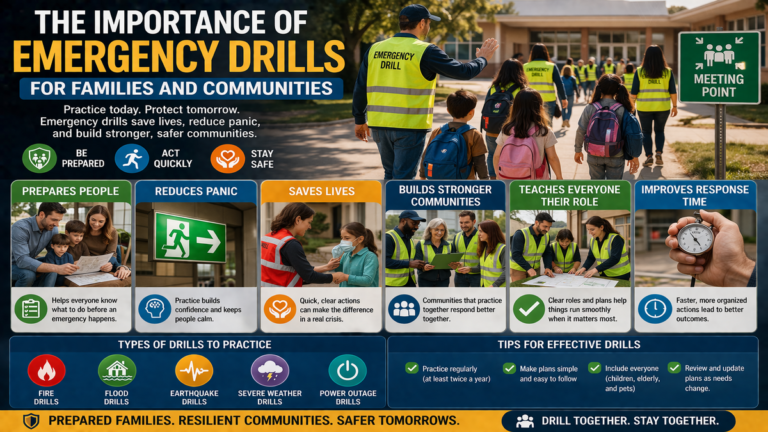
- Creating emergency plans
- Training responders and communities
- Setting up communication systems
The goal is simple — reduce confusion when a disaster occurs.
Preparedness also includes public awareness. When people know what to do, response becomes faster and more effective.
Why Preparedness Makes the Biggest Difference
Communities that invest in preparedness tend to handle disasters better.
Why? Because:
- Response teams already know their roles
- Resources are pre-positioned
- Communication systems are tested
Preparation doesn’t prevent disasters, but it reduces their impact.
Response: Acting in the Moment
The response phase begins the moment a disaster occurs.
This is the most visible part of disaster management, involving:
- Emergency services deployment
- Rescue and evacuation operations
- Medical assistance
- Securing affected areas
Speed is critical, but coordination is just as important.
Multiple agencies often work together during this phase, and clear communication keeps everything moving.
The Role of Emergency Services During Response
Emergency responders are at the center of this phase.
They:
- Assess the situation quickly
- Prioritize life-saving actions
- Adapt to changing conditions
Their work is supported by dispatch systems, field communication, and coordinated planning developed during the preparedness phase.
Recovery: Rebuilding After the Crisis
Once immediate danger has passed, recovery begins.
This phase focuses on:
- Restoring essential services
- Repairing infrastructure
- Supporting affected communities
- Providing long-term assistance
Recovery can take days, months, or even years, depending on the scale of the disaster.
Why Recovery Is Often Overlooked
Recovery doesn’t get as much attention as response, but it’s just as important.
Without proper recovery efforts:
- Communities struggle to return to normal
- Economic and social impacts last longer
- Future risks may increase
A strong recovery phase helps communities rebuild not just quickly, but safely.
How the Three Phases Work Together
Disaster management isn’t linear — it’s a cycle.
- Lessons from recovery improve future preparedness
- Preparedness strengthens response
- Response influences how recovery unfolds
Each phase feeds into the next, creating a system that evolves over time.
The Role of Technology in Disaster Management
Technology has changed how disasters are managed.
Today’s systems use:
- Early warning alerts
- Real-time communication tools
- Data analysis for risk assessment
These tools improve speed and accuracy, but they still rely on human decision-making.
The Importance of Community Involvement
Disaster management isn’t only handled by authorities.
Communities play a key role by:
- Following safety guidelines
- Participating in preparedness programs
- Supporting each other during recovery
When communities are informed and involved, outcomes improve significantly.
Common Challenges in Disaster Management
Even well-prepared systems face challenges.
These include:
- Limited resources
- Communication gaps
- Unpredictable conditions
- High population density in risk areas
Managing these challenges requires flexibility and continuous improvement.
The Bigger Picture
Disaster management is not just about emergencies. It’s about reducing risk, protecting lives, and helping communities recover stronger.
The systems behind it are constantly evolving — shaped by experience, technology, and lessons learned from past events.
The Takeaway
Understanding disaster management explained: preparedness, response & recovery gives a clearer view of how crises are handled from start to finish.
It’s not just about reacting quickly. It’s about being ready, acting effectively, and rebuilding with purpose.
And in most cases, the strongest responses begin long before the disaster itself.