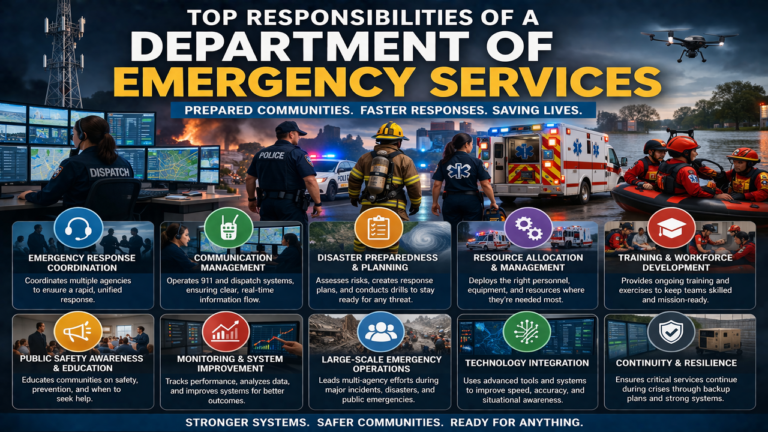
When something goes wrong — a road accident, a sudden medical crisis, a fire breaking out — there’s usually one instinctive reaction: call for help. Behind that simple action is a complex system designed to respond quickly, coordinate efficiently, and save lives. These systems are known as emergency services, and most of us rely on them without fully understanding how they work.
This guide breaks it down in plain terms — what emergency services are, how they operate, and why they matter more than we often realize.
What Are Emergency Services?
Emergency services are organizations that respond to urgent situations where there is a risk to life, health, property, or public safety. Their primary goal is to act quickly, stabilize the situation, and reduce harm.
They operate 24/7 and are trained to handle high-pressure scenarios where time is critical.
In most countries, emergency services are accessed through a single emergency number — like 112, 911, or 999 — depending on the region.
The Core Types of Emergency Services
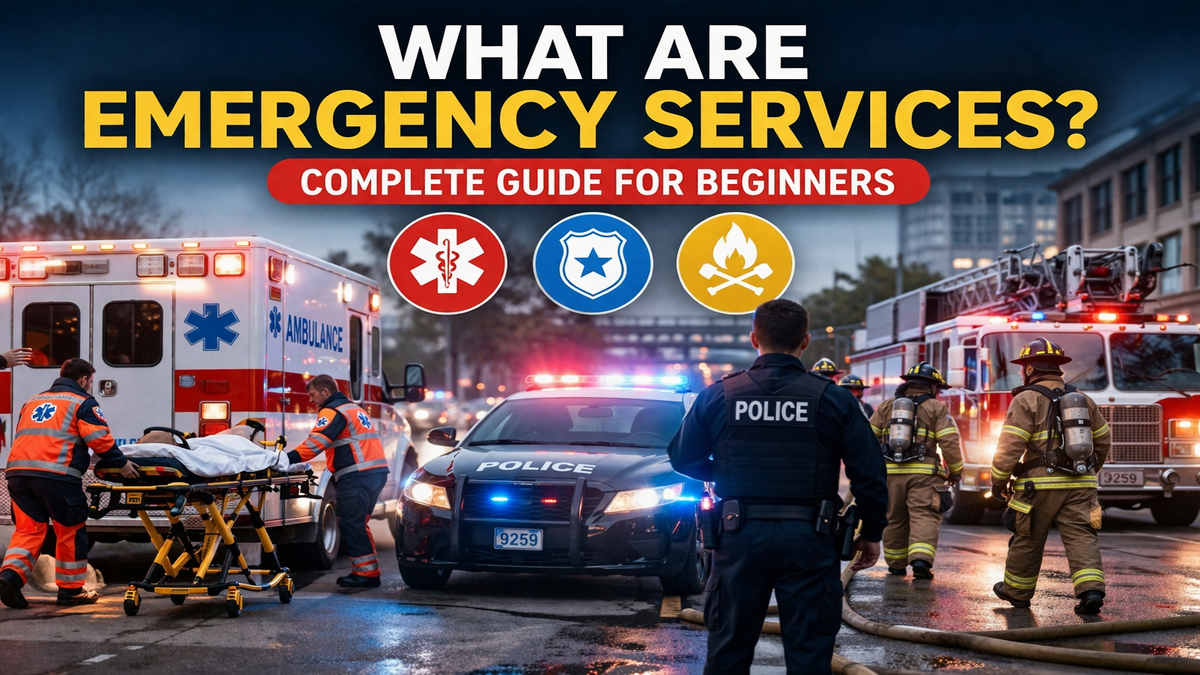
While systems vary by country, most emergency response frameworks are built around three main services.
Medical Emergency Services (EMS)
These teams respond to health-related emergencies such as heart attacks, injuries, strokes, or severe illness. Paramedics and emergency medical technicians (EMTs) provide immediate care and transport patients to hospitals.
Fire Services
Firefighters handle fires, but their role goes beyond that. They respond to road accidents, rescue operations, hazardous material incidents, and even natural disasters. In many cases, they are the first to arrive on scene.
Police Services
Police respond to crime, accidents, and situations involving public safety. They also play a key role in managing crowds, securing accident scenes, and coordinating with other emergency teams.
Together, these services form the backbone of emergency response systems.
How Emergency Services Work in Real Situations
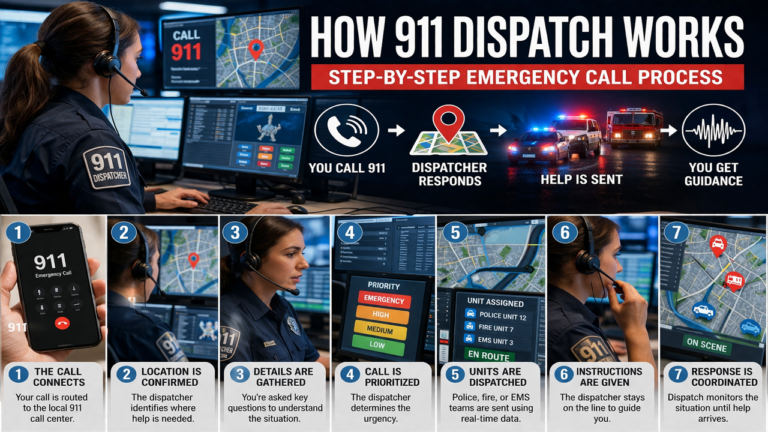
When someone places an emergency call, the process starts immediately.
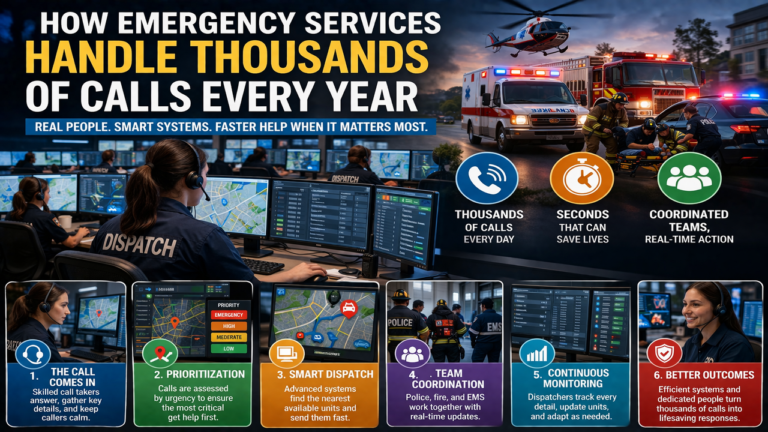
A dispatcher receives the call, gathers key details, and sends the appropriate service — sometimes more than one. For example, a serious car accident may involve police, ambulance, and fire services all at once.
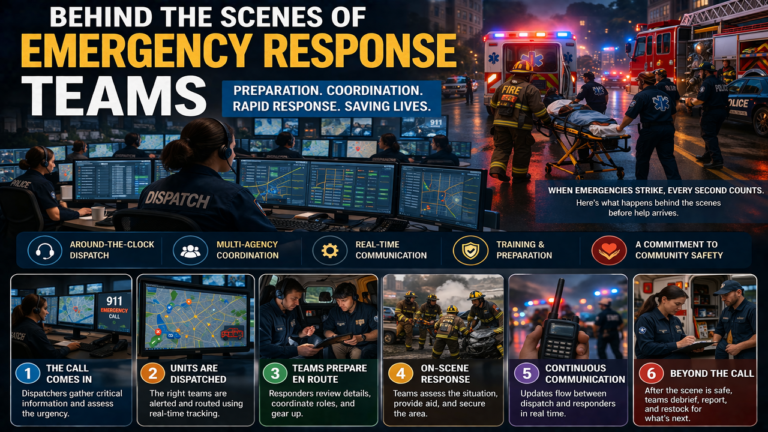
Communication is constant. Teams coordinate through control rooms, radio systems, and digital tracking tools to ensure the fastest and most effective response.
Speed matters, but so does accuracy.
Why Response Time Is So Critical
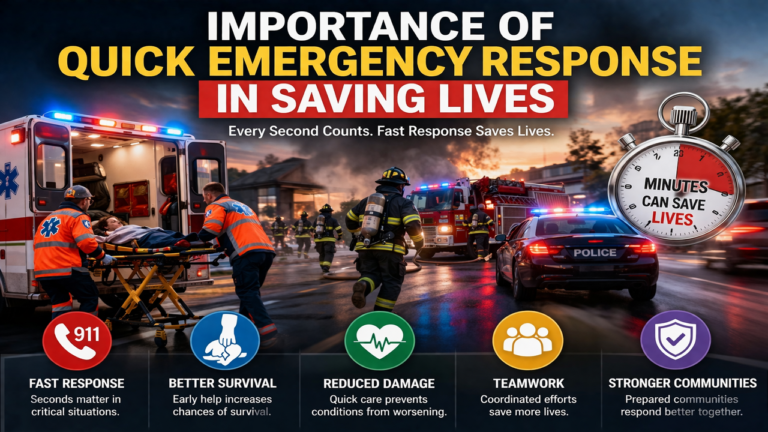
In emergencies, minutes can make the difference between recovery and long-term damage — or even life and death.
- In cardiac arrest cases, early intervention significantly improves survival chances
- In fires, quick response can prevent spread and structural collapse
- In accidents, immediate medical care reduces complications
This is why emergency services invest heavily in training, infrastructure, and rapid deployment systems.
Beyond Immediate Response: The Hidden Roles
Emergency services don’t just respond — they also prepare, prevent, and educate.
Preparedness
Teams train regularly for disasters, large-scale incidents, and unusual scenarios.
Prevention
Fire departments conduct safety inspections. Police run awareness programs. Medical teams promote first aid training.
Community support
Emergency services often assist during public events, extreme weather, and community crises.
Much of their work happens before an emergency ever occurs.
Common Situations That Require Emergency Services
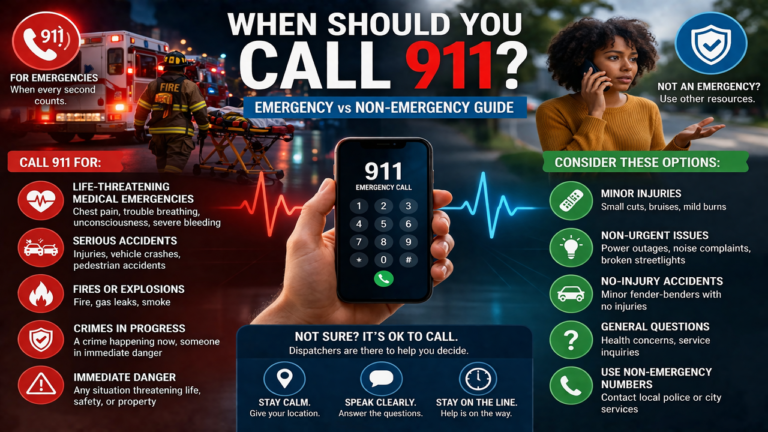
Not every problem is an emergency, but some situations clearly require immediate help.
You should contact emergency services if there is:
- A life-threatening medical condition
- A fire or explosion risk
- A serious accident or injury
- A crime in progress
- Immediate danger to people or property
Understanding when to call helps ensure resources are available for those who need them most.
Misuse of Emergency Services: A Growing Concern
One challenge many systems face is misuse — non-urgent calls that take up valuable time and resources.
Calling emergency services for minor issues can delay response to critical cases. This is why many regions also offer non-emergency numbers for less urgent situations.
Public awareness plays a big role in keeping systems efficient.
How Technology Is Changing Emergency Response
Modern emergency services are evolving rapidly with technology.
Some of the latest improvements include:
- GPS tracking for faster dispatch
- Real-time data sharing between teams
- Drones for search and rescue
- AI-assisted call handling systems
These tools don’t replace human responders, but they make their work faster and more precise.
What You Can Do in an Emergency
While professional responders are trained for crisis situations, the actions taken before they arrive can make a difference.
Basic steps include:
- Staying calm and calling emergency services immediately
- Providing clear, accurate information
- Following dispatcher instructions
- Avoiding unnecessary risks
In many cases, simple actions like basic first aid or guiding responders to the location can help save time.
The Bigger Picture
Emergency services are one of the most critical public systems in any society. They operate quietly in the background until they’re needed — and when they are, they become the front line of safety.
Most people don’t think about them daily. But when the moment comes, their presence is everything.
The Takeaway
Understanding what emergency services are isn’t just general knowledge — it’s practical awareness. Knowing how they work, when to call, and what to expect can make a real difference in urgent situations.
Emergency services are built on speed, coordination, and trust. And for beginners, that’s the most important thing to remember: help is always one call away — but knowing how to use it wisely matters just as much.